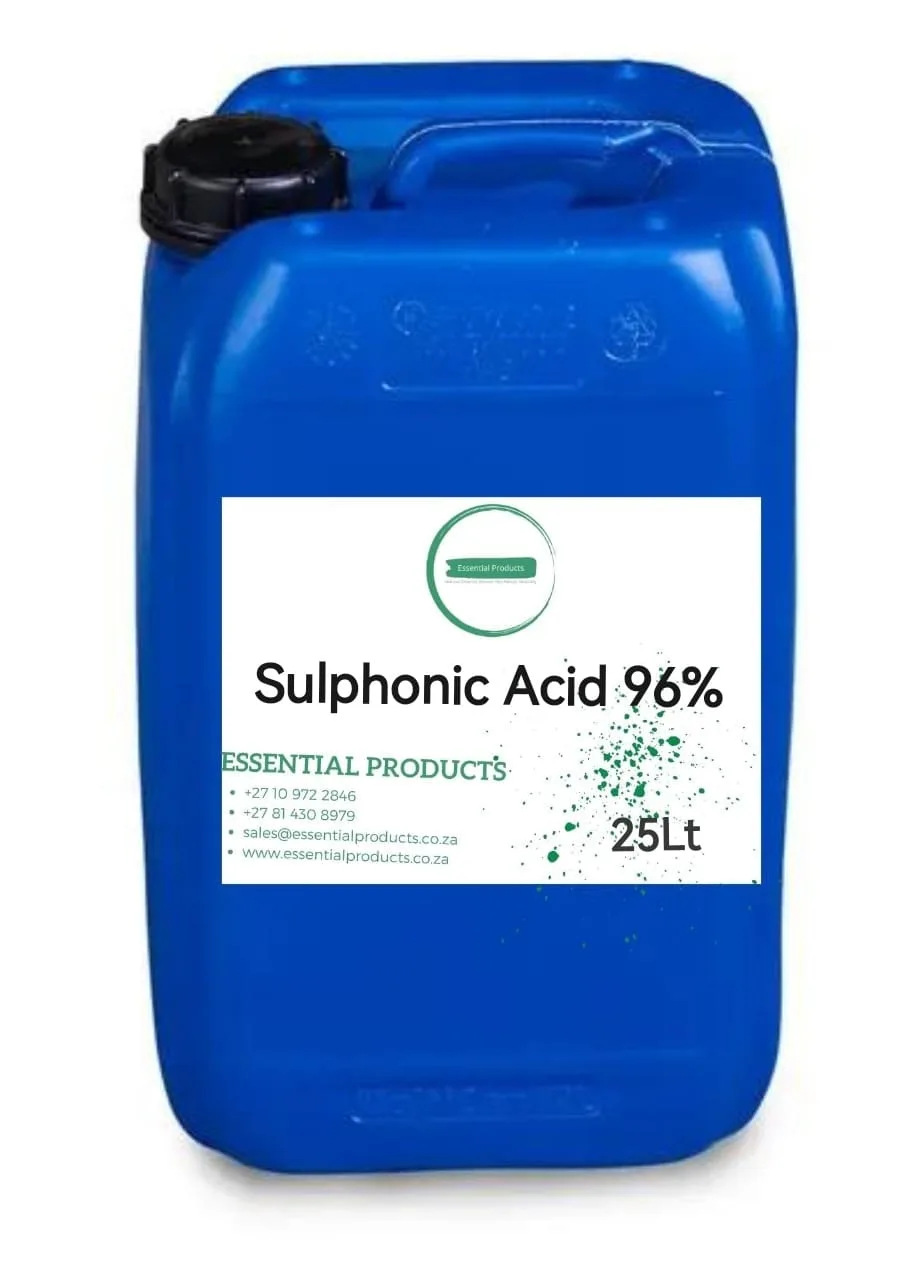
focusing on the versatile and potent substance, Australia Sulphonic Acid 96%.
Okay, let’s craft an article focusing on the versatile and potent substance, Sulphonic Acid 96%.
Sulphonic Acid 96% is a highly concentrated sulphonic acid solution with a purity of 96%.
Section 1: Identification
- Product Name: Sulfonic Acid 96%
- Chemical Name: Sulfonic Acid
- CAS Number: Varies depending on the specific sulfonic acid compound
Section 2: Hazard Identification
- Classification:
- Skin corrosion/irritation (Category 1B)
- Serious eye damage/eye irritation (Category 1)
- Acute toxicity (Oral, Dermal, Inhalation) (Category 4)
- Label Elements:
- Pictograms:
- Signal Word: Danger
- Hazard Statements:
- H290: May be corrosive to metals.
- H314: Causes severe skin burns and eye damage.
- H318: Causes serious eye damage.
- Pictograms:
- Precautionary Statements:
- P280: Wear protective gloves/protective clothing/eye protection/face protection.
- P305+P351+P338: IF IN EYES: Rinse cautiously with water for several minutes. Remove contact lenses, if present and easy to do. Continue rinsing.
Section 3: Composition/Information on Ingredients
- Substance: Sulfonic Acid
- CAS Number: Varies depending on the specific sulfonic acid compound
- Concentration: 96%
Section 4: First Aid Measures
- General Advice: Remove contaminated clothing immediately. Wash skin with plenty of soap and water. Rinse eyes with water. Seek medical attention if necessary.
- Inhalation: Remove to fresh air. If breathing is difficult, give oxygen. Seek medical attention.
- Skin Contact: Immediately flush skin with plenty of water for at least 15 minutes while removing contaminated clothing and shoes. Wash clothing before reuse. Seek medical attention.
- Eye Contact: Immediately flush eyes with plenty of water for at least 15 minutes, lifting upper and lower eyelids occasionally. Seek medical attention.
Section 5: Fire-Fighting Measures
- Suitable Extinguishing Media: Water spray, foam, dry chemical, carbon dioxide.
- Special Hazards: May emit corrosive fumes under fire conditions.
- Advice for Firefighters: Wear self-contained breathing apparatus and full protective gear. Cool containers exposed to flames with water.
Section 6: Accidental Release Measures
- Personal Precautions: Wear appropriate protective equipment. Avoid breathing vapors, mist, or gas. Ensure adequate ventilation. Evacuate the area.
- Environmental Precautions: Prevent entry into sewers, waterways, or confined spaces.
- Cleanup Procedures: Absorb spillage with non-combustible absorbent material. Dispose of according to local regulations.
Section 7: Handling and Storage
- Handling Precautions: Handle with care. Avoid contact with skin and eyes. Use in a well-ventilated area. Use appropriate personal protective equipment.
- Storage Conditions: Store in a cool, dry, well-ventilated area away from incompatible materials. Keep container tightly closed.
Section 8: Exposure Controls/Personal Protection
- Exposure Limits: Consult local regulations for specific exposure limits.
- Engineering Controls: Use local exhaust ventilation to maintain airborne concentrations below occupational exposure limits.
- Personal Protective Equipment (PPE):
- Eye/Face Protection: Safety goggles or face shield.
- Skin Protection: Chemical-resistant gloves, protective clothing, and boots.
- Respiratory Protection: NIOSH-approved respirator if ventilation is inadequate.
Section 9: Physical and Chemical Properties
- Appearance: Clear colorless liquid
- Odor: Varies depending on the specific sulfonic acid compound
- pH: Varies
- Melting Point/Freezing Point: Varies
- Boiling Point: Varies
- Flash Point: Varies
- Auto-ignition Temperature: Varies
- Density: Varies
- Solubility: Miscible with water
Section 10: Stability and Reactivity
- Chemical Stability: Stable under normal conditions.
- Possibility of Hazardous Reactions: Reacts violently with strong oxidizers.
- Conditions to Avoid: Heat, flames, strong oxidizers.
- Incompatible Materials: Strong oxidizing agents, acids, bases, metals.
- Hazardous Decomposition Products: Varies depending on the specific sulfonic acid compound.
Section 11: Toxicological Information
- Acute Toxicity: LD50 (Oral, Rat): Varies depending on the specific sulfonic acid compound
- Skin Irritation: Causes skin irritation.
- Eye Irritation: Causes serious eye irritation.
Reviews
There are no reviews yet.