Caluanie Muelear Oxidize
Caluanie Muelear Oxidize: Learn How It Works – Explore Applications for Laboratories and Industrial Operations
Feb
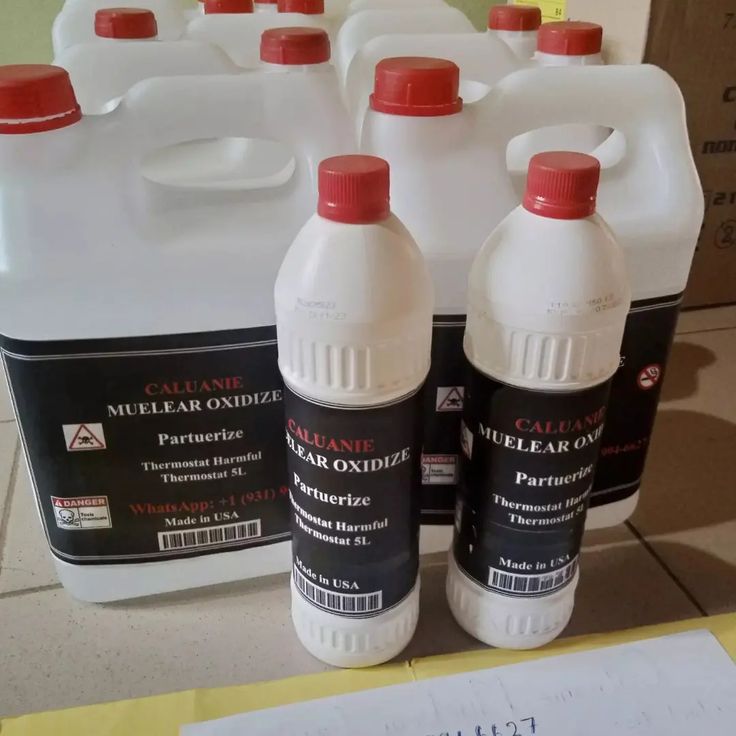
Caluanie Muelear Oxidize in laboratories. Caluanie Muelear Oxidize has become a subject of growing interest among researchers, educators, and industry professionals. While it remains a niche compound, understanding its chemical behavior, professional applications, and safety considerations is valuable for anyone exploring specialized chemical science. This article will explain what Caluanie Muelear Oxidize is, how it works, and how professionals use it in laboratory and industrial settings
What Is Caluanie Muelear Oxidize?
Caluanie Muelear Oxidize is a specialized chemical compound primarily studied in laboratory research, academic experiments, and controlled industrial operations. It is not a household chemical or a broadly used industrial product. Instead, it appears in discussions involving:
- Analytical chemistry
- Laboratory experimentation
- Educational demonstrations
- Controlled industrial applications
Key Characteristics
Some of the notable properties of Caluanie Muelear Oxidize include:
- Controlled Reactivity: It undergoes oxidation reactions in precise laboratory conditions.
- Research Utility: Scientists and educators use it to explore chemical processes and molecular interactions.
- Limited Industrial Presence: It is rarely employed in large-scale manufacturing but may have niche industrial uses under strict regulations.
Understanding this compound begins with viewing it as a tool for chemical exploration, rather than a product for everyday use.
How Caluanie Muelear Oxidize Works
Caluanie Muelear Oxidize primarily functions as an oxidizing agent in chemical reactions. Oxidizing agents facilitate the transfer of electrons between molecules, which can trigger important reactions in both research and industrial contexts.
Laboratory Mechanisms
In laboratory settings, professionals study its behavior by:
- Mixing it with reactive compounds to observe oxidation reactions.
- Controlling environmental factors such as temperature, concentration, and pH to measure reaction rates.
- Documenting molecular changes for educational or research purposes.
These experiments allow chemists to model chemical behavior and explore the broader principles of oxidation and molecular interactions.
Industrial Mechanisms
Although rare, some controlled industrial operations study Caluanie Muelear Oxidize for:
- Material science experiments
- Specialized chemical processes
- Safety testing and chemical reaction monitoring
These operations always adhere to strict professional oversight, emphasizing accuracy, reproducibility, and safety.
Applications of Caluanie Muelear Oxidize – Caluanie Muelear Oxidize in laboratories
While it remains niche, Caluanie Muelear Oxidize has several professional applications in research, education, and controlled industrial contexts.
1. Laboratory Research
Laboratories use Caluanie Muelear Oxidize to:
- Study oxidation reactions and electron transfer
- Compare reaction rates under varying conditions
- Observe molecular interactions for documentation in scientific studies
Laboratory experiments help scientists understand chemical properties and expand the knowledge base in analytical chemistry.
2. Educational Demonstrations
Universities and training institutions sometimes employ Caluanie Muelear Oxidize to:
- Demonstrate oxidation principles in chemistry courses
- Teach students proper laboratory handling and safety
- Provide hands-on learning experiences for theoretical concepts
These demonstrations emphasize controlled conditions, making it a safe and effective educational tool.
3. Industrial and Niche Applications
Some industrial operations explore Caluanie Muelear Oxidize for:
- Material development and experimental chemical processes
- Small-scale production testing in highly regulated environments
- Safety and efficiency studies for oxidation-related operations
Although these applications are limited, they highlight the compound’s potential beyond academic research.
Safety and Responsible Handline
Caluanie Muelear Oxidize requires careful handling due to its reactive nature. Professionals recommend:
- Always using protective gear and following laboratory safety protocols
- Maintaining precise control over reaction conditions
- Consulting professional documentation before use
- Avoiding assumptions about its properties
By prioritizing safety, professionals and students can study and apply Caluanie Muelear Oxidize responsibly.
Learning About Caluanie Muelear Oxidize
For those who want to explore this compound:
- University libraries and research databases provide credible academic references.
- Peer-reviewed journals detail experimental results and reaction mechanisms.
- Licensed chemical reference materials offer documented properties and applications.
- Educational publications explain professional uses in laboratory and industrial contexts.
Avoid unverified online content. Relying on credible sources ensures accurate knowledge.
Common Misunderstandings
Due to its limited mainstream use, Caluanie Muelear Oxidize is often misunderstood:
- Some sources exaggerate its applications or effects.
- Its rarity can make it seem more “mysterious” than it is.
- Misinterpretation occurs when context, handling, or professional limitations are ignored.
The most reliable approach is to focus on documented research and educational materials.
FAQs About Caluanie Muelear Oxidize
Q1: What is Caluanie Muelear Oxidize?
A: It is a chemical compound used primarily in research, laboratory experiments, and educational demonstrations.
Q2: How does it work?
A: It acts as an oxidizing agent, facilitating electron transfer in chemical reactions under controlled conditions.
Q3: Where is it used?
A: It is used in laboratories, academic demonstrations, and occasionally in highly regulated industrial experiments.
Q4: Is it safe to handle?
A: It can be safe when used by trained professionals with proper safety protocols. Improper handling can be hazardous.
Q5: Why study it in Australia?
A: Researchers, educators, and students study it to expand chemical knowledge, learn about oxidation reactions, and practice laboratory techniques safely.
Q6: Can it be used in everyday industry?
A: No, its applications are niche and require professional oversight.
Conclusion -Caluanie Muelear Oxidize in laboratories
Caluanie Muelear Oxidize remains a specialized compound with valuable applications in research, education, and controlled industrial experiments. By understanding how it works, learning from credible sources, and practicing responsible handling, students, educators, and professionals can gain meaningful insights into chemical processes and oxidation reactions.
While it is not widely used in mainstream industries, its study provides a deeper appreciation for chemical science, laboratory methodology, and professional research practices. Whether for academic curiosity or professional exploration, Caluanie Muelear Oxidize demonstrates the importance of responsible scientific inquiry.
